Pet friendly private jet by airport
Flying with a pet starts with the right airport. Teterboro sits at just 9 feet elevation, which helps on hot days. This guide compares pet friendly private jet options by airport.
- Home
- Airports
Choosing an airport with pet friendly private jet options starts with runway length and density altitude; at Teterboro, the longest runway is 6,997 feet and peak summer density altitude reaches 2,300 feet, so light jets and turboprops have room to work. The airport you pick shapes which aircraft types can operate and how your pet travels, and it shapes the price too.
For a pet friendly private jet by airport, the operator's pet policy matters more than the FBO; some allow pets in the cabin, others require them in a carrier. Under FAA Part 135 rules, the operator sets the final say, so confirm before booking. As a DOT Part 295 broker we act as your agent, and every flight is flown by an operator holding operational control.
Airports differ in more than runway length. Elevation, summer heat, customs capability and the types of aircraft based nearby all narrow the list. A midsize jet that cruises at 440 knots and carries 7 to 9 passengers may suit a large dog on a long route, while a light jet with 4 to 7 seats can handle a short hop with a carrier.
Runway length and density altitude decide which jets can carry pets out of Colorado and Arizona airports, so a route that works from sea level may need a different aircraft from a high plateau. Read the comparison below before you request quotes, and give the operator your pet's size and crate dimensions upfront.
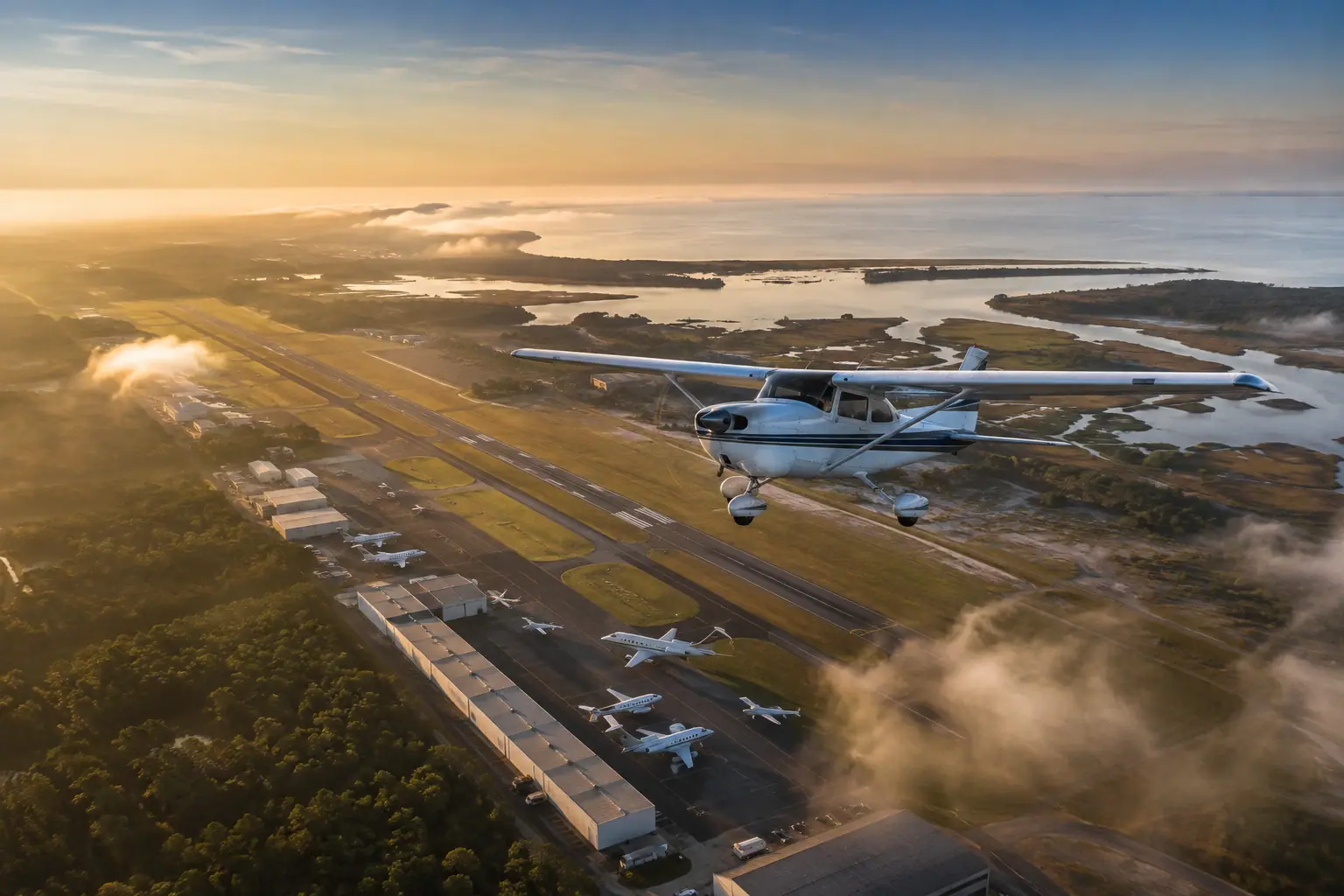
Teterboro Airport
- KTEB code
- 9 ft field alt
2 runways, maximum 6,997 ft. 0 miles from New York. FBO: Jet Aviation, Signature Aviation East, Atlantic Aviation, Signature Aviation West.
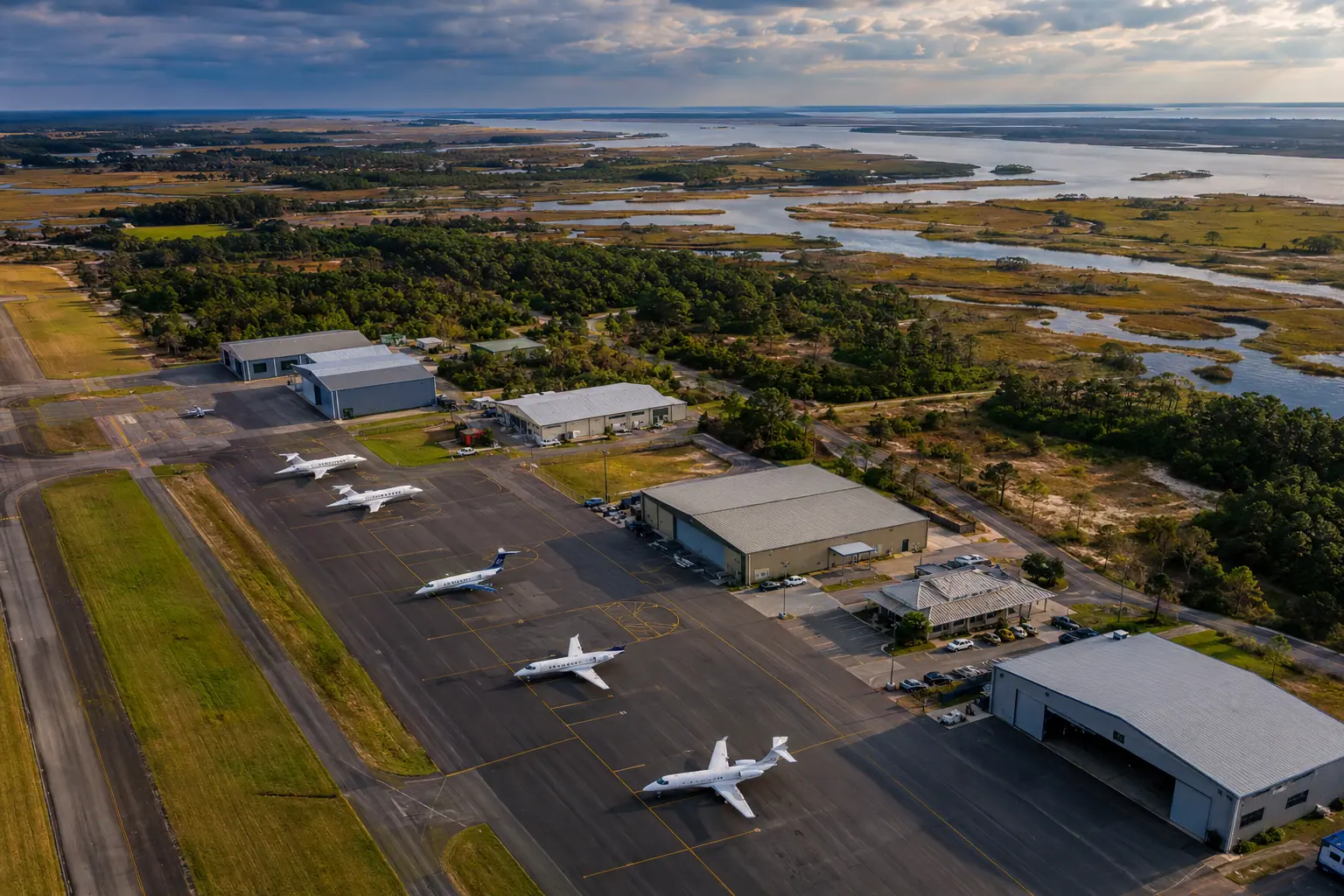
Van Nuys Airport
- KVNY code
- 802 ft field alt
2 runways, maximum 8,001 ft. 0 miles from New York. FBO: Signature Aviation (West), Signature Aviation VNY North, Jet Aviation Van Nuys, The Park VNY.
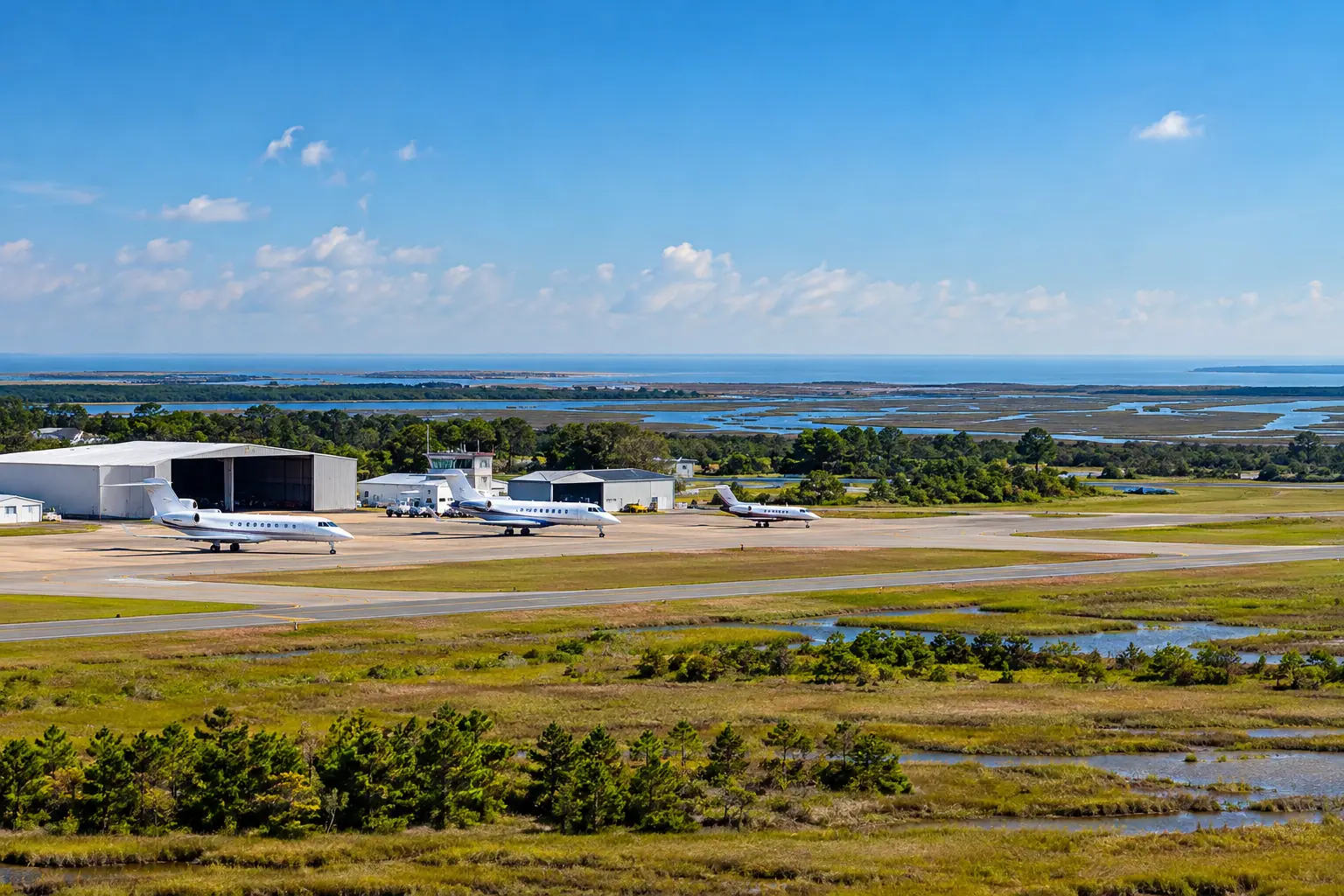
Miami-Opa Locka Executive Airport
- KOPF code
- 8 ft field alt
3 runways, maximum 8,002 ft. 0 miles from New York. FBO: Atlantic Aviation, Signature Aviation, Jet Aviation, Fontainebleau Aviation.
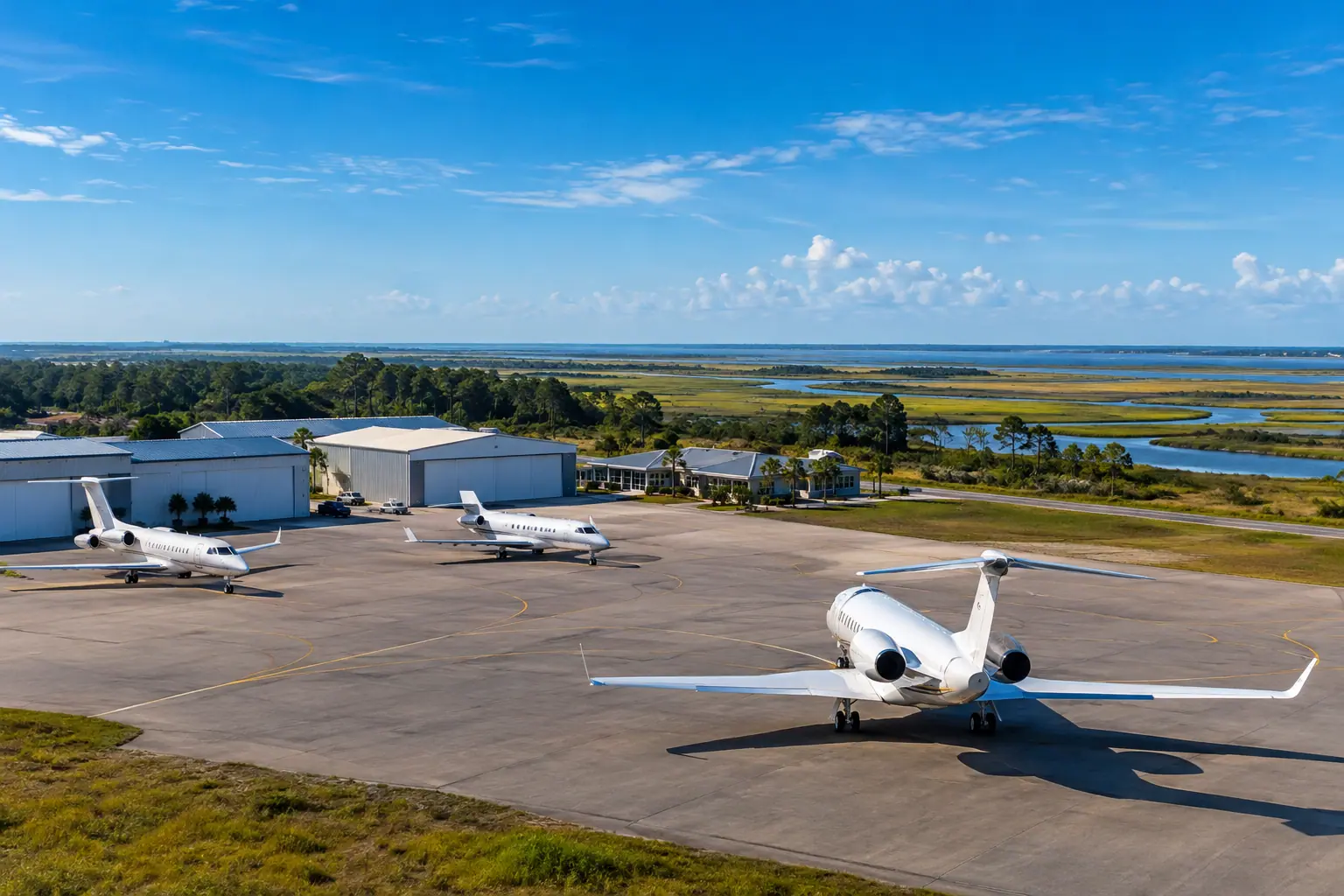
Chicago Midway International Airport
- KMDW code
- 620 ft field alt
4 runways, maximum 6,522 ft. 0 miles from New York. FBO: Atlantic Aviation, Signature Aviation.
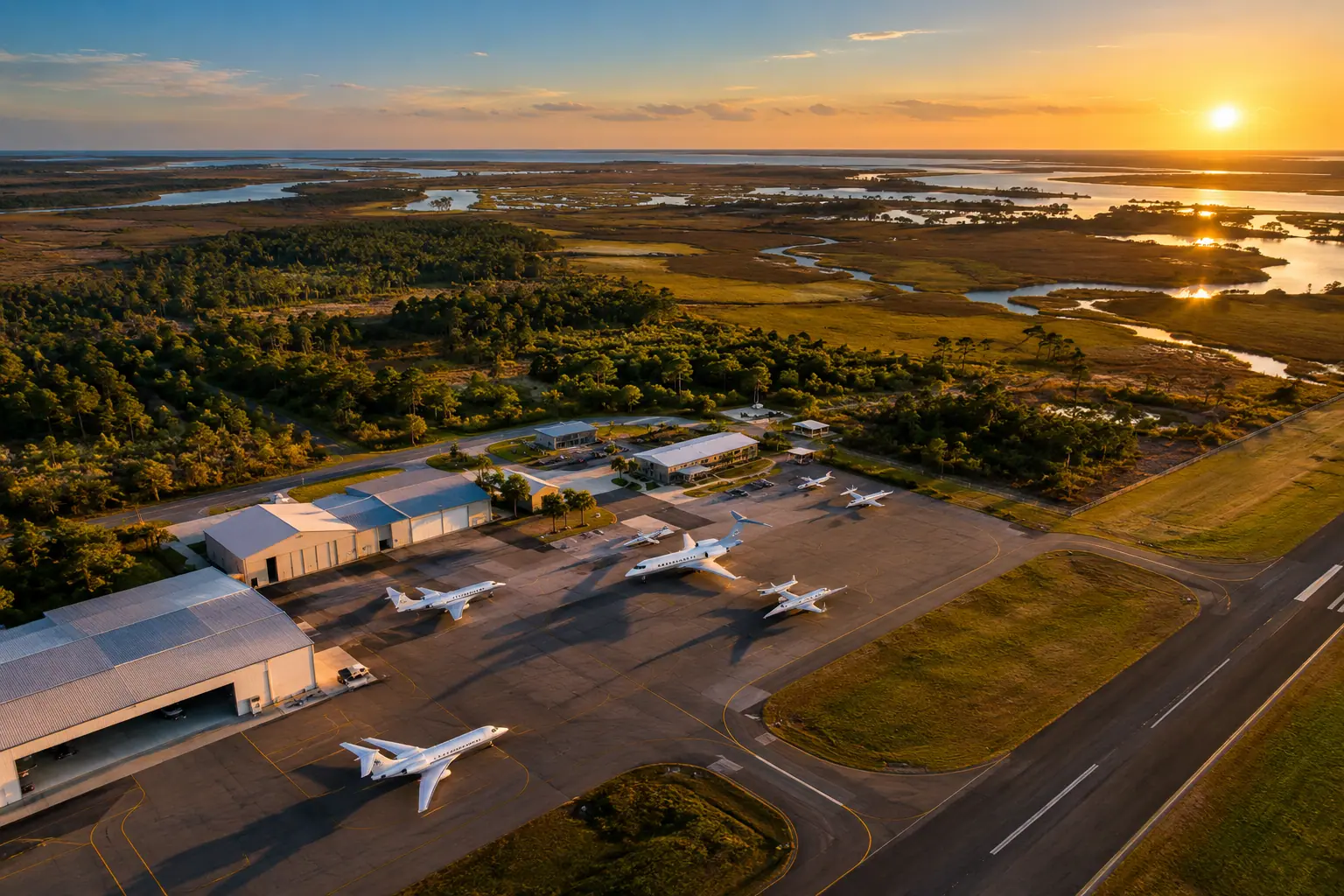
Dallas Love Field
- KDAL code
- 487 ft field alt
2 runways, maximum 8,800 ft. 0 miles from New York. FBO: Atlantic Aviation, Jet Aviation, Signature Aviation (Terminal 1 at A2), Jet Access Dallas.
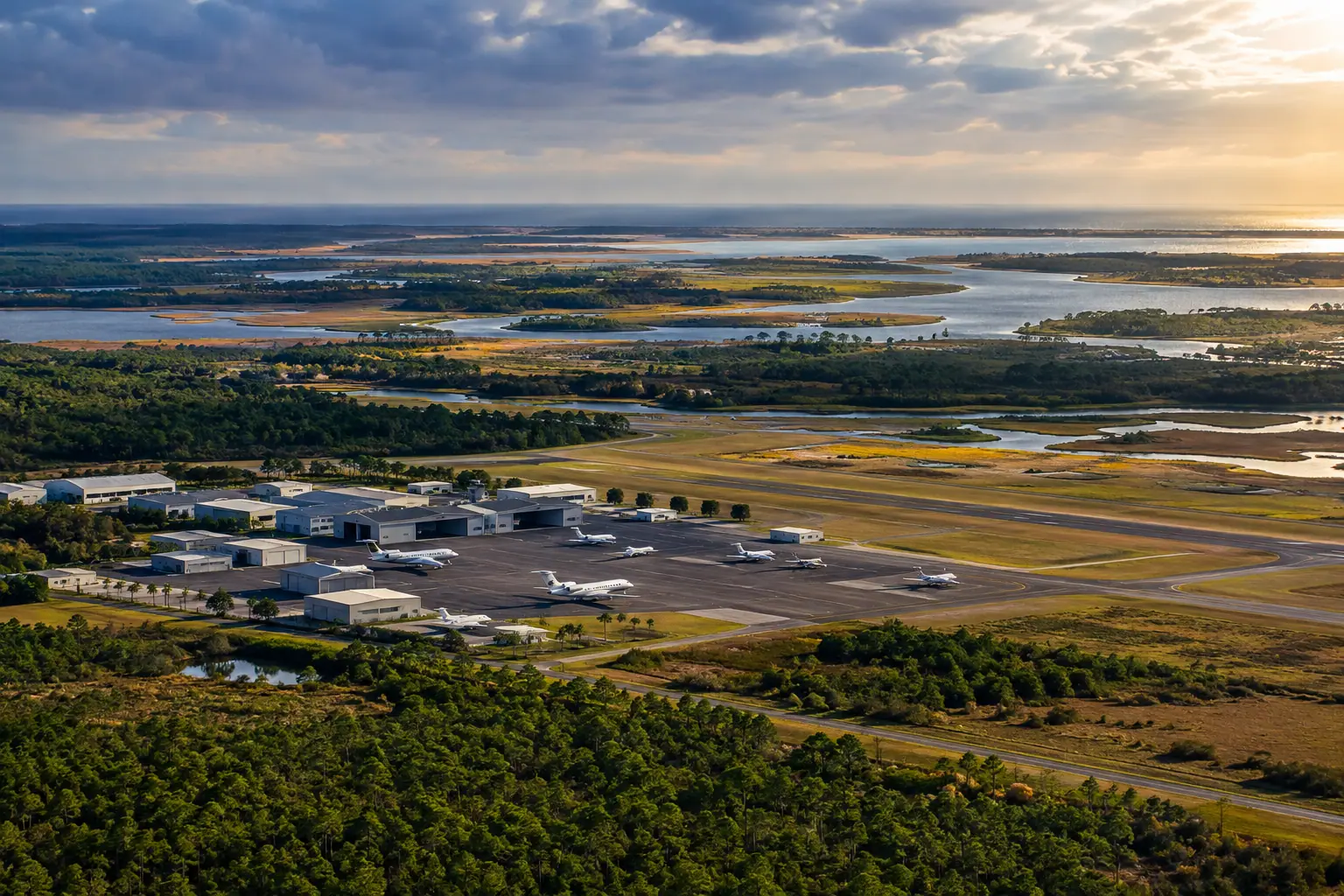
William P. Hobby Airport
- KHOU code
- 46 ft field alt
3 runways, maximum 7,602 ft. 0 miles from New York. FBO: Wilson Air Center, Million Air Houston, Jet Aviation Houston, Atlantic Aviation, Signature Aviation, Henriksen Jet Center.
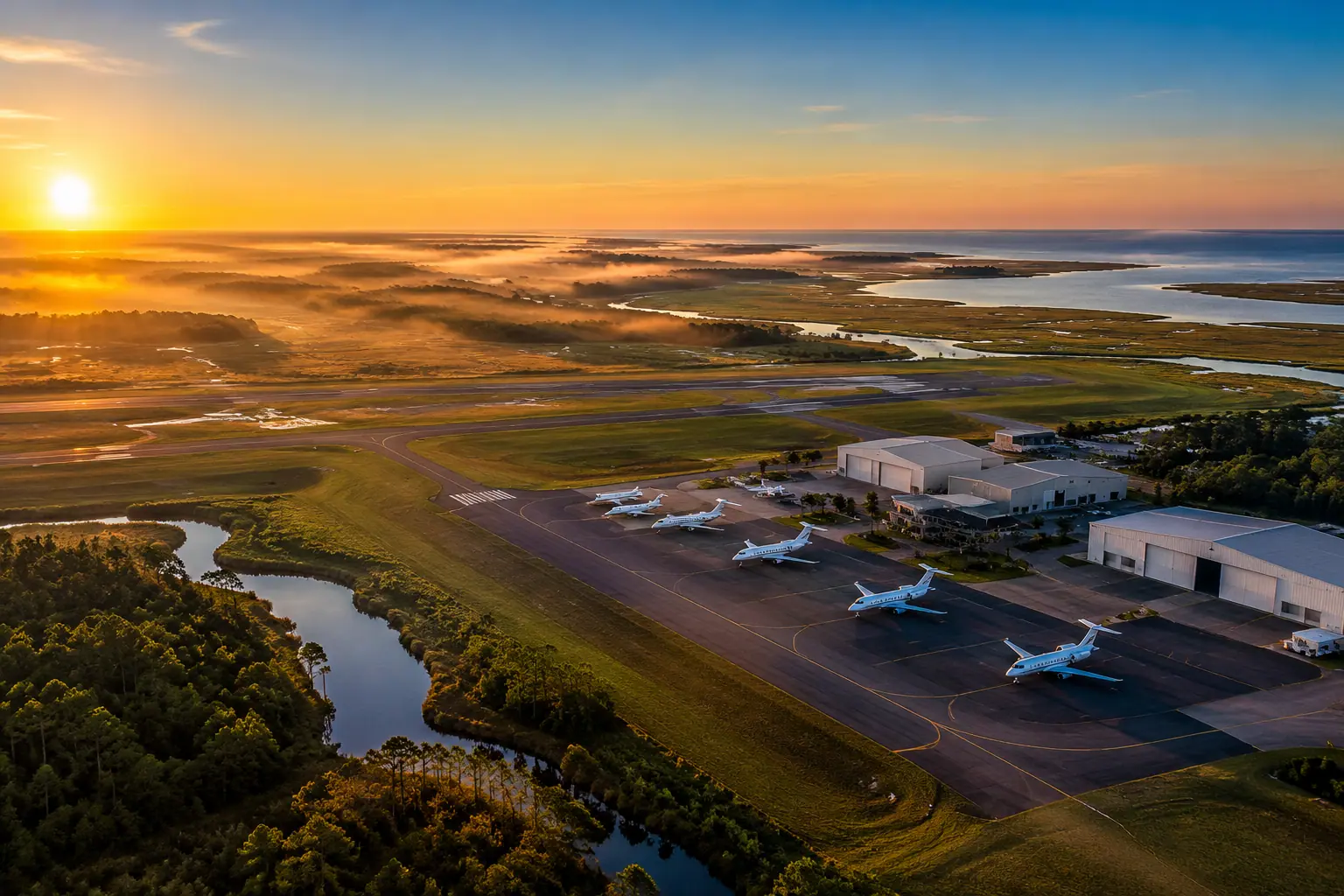
DeKalb Peachtree Airport
- KPDK code
- 1,003 ft field alt
3 runways, maximum 6,001 ft. 0 miles from New York. FBO: Atlantic Aviation, Signature Aviation.
Washington Dulles International Airport
- KIAD code
- 312 ft field alt
4 runways, maximum 11,500 ft. 0 miles from New York. FBO: Atlantic Aviation, Signature Aviation, APP Jet Center - Manassas.
Laurence G Hanscom Field
- KBED code
- 133 ft field alt
2 runways, maximum 7,011 ft. 0 miles from New York. FBO: Jet Aviation Bedford, Atlantic Aviation, Signature Aviation, FlightLevel Aviation.
San Francisco International Airport
- KSFO code
- 13 ft field alt
4 runways, maximum 11,870 ft. 0 miles from New York.
Harry Reid International Airport
- KLAS code
- 2,181 ft field alt
4 runways, maximum 14,835 ft. 0 miles from New York. FBO: Atlantic Aviation, Signature Aviation.
King County International Airport - Boeing Field
- KBFI code
- 21 ft field alt
2 runways, maximum 10,007 ft. 0 miles from New York. FBO: Modern Aviation, Signature Aviation, Skyservice Seattle, Vesper Aviation.
Centennial Airport
- KAPA code
- 5,885 ft field alt
3 runways, maximum 10,001 ft. 0 miles from New York. FBO: jetCenters of Colorado, Modern Aviation, Signature Aviation - North.
Phoenix Deer Valley Airport
- KDVT code
- 1,478 ft field alt
2 runways, maximum 8,196 ft. 0 miles from New York. FBO: Cutter Aviation.
Northeast Philadelphia Airport
- KPNE code
- 120 ft field alt
2 runways, maximum 7,000 ft. 0 miles from New York. FBO: Atlantic Aviation.
Orlando Executive Airport
- KORL code
- 113 ft field alt
2 runways, maximum 6,004 ft. 0 miles from New York. FBO: Sheltair.
Tampa International Airport
- KTPA code
- 26 ft field alt
3 runways, maximum 11,002 ft. 0 miles from New York. FBO: Sheltair, Signature Aviation.
Nashville International Airport
- KBNA code
- 599 ft field alt
4 runways, maximum 11,030 ft. 0 miles from New York. FBO: Atlantic Aviation, Azure Flight Support, Contour Flight Support, Signature Aviation.
Charlotte Douglas International Airport
- KCLT code
- 748 ft field alt
3 runways, maximum 10,000 ft. 0 miles from New York. FBO: Pilatus Aircraft USA, Ltd.
Austin Bergstrom International Airport
- KAUS code
- 542 ft field alt
2 runways, maximum 12,250 ft. 0 miles from New York. FBO: Atlantic Aviation, Signature Aviation, Henriksen Jet Center.
Pet friendly private jet by airport
Van Nuys has an 8,001-foot runway and July density altitude of 3,200 feet, making it a strong choice for midsize jets carrying pets on longer routes. Its elevation is 802 feet, and four FBOs on the field give ground crews room to stage a carrier and cool the cabin before boarding. Centennial Airport sits at 5,885 feet elevation with a 10,001-foot runway, so density altitude climbs to 9,200 feet in July and 9,700 feet at 115F. That limits some light jets; plan for a super-midsize or heavy jet if your pet needs cabin space and the route is long. If you're flying from the East Coast, Teterboro's 6,997-foot runway and 9-foot elevation are forgiving in summer. When peak density altitude hits 2,300 feet at 115F, light jets still operate comfortably at Teterboro, which is why so many pet friendly private jet flights to the Northeast start there. Dallas Love Field pairs a 4-foot-scale elevation of 487 feet with an 8,800-foot runway, so July density altitude of 3,000 feet rarely forces a weight cut. Fort Worth-bound pet owners often drive past it for a shorter hop; if the carrier is large, then a midsize jet gives more floor space. On the West Coast, King County International sits at 21 feet elevation with a 10,007-foot runway, and July density altitude of 1,200 feet keeps performance predictable for turboprops and light jets alike. When a dog needs to stay in the cabin on a Seattle run, then a midsize jet with 7 to 9 seats gives the most floor room. Miami-Opa Locka Executive tops out at 8 feet elevation with an 8,002-foot runway, so heat matters more than altitude for pets on the ramp. For international legs out of South Florida, CBP clearance adds time on the ground, so build in a buffer before your cat or dog leaves the carrier.
| Airport | Elevation | Longest runway | To New York | July density elevation |
|---|---|---|---|---|
| Teterboro Airport | 9 ft | 6,997 ft | 0 mi | 1,700 ft |
| Van Nuys Airport | 802 ft | 8,001 ft | 0 mi | 3,200 ft |
| Miami-Opa Locka Executive Airport | 8 ft | 8,002 ft | 0 mi | 1,900 ft |
| Chicago Midway International Airport | 620 ft | 6,522 ft | 0 mi | 2,300 ft |
| Dallas Love Field | 487 ft | 8,800 ft | 0 mi | 3,000 ft |
| William P. Hobby Airport | 46 ft | 7,602 ft | 0 mi | 2,200 ft |
| DeKalb Peachtree Airport | 1,003 ft | 6,001 ft | 0 mi | 3,200 ft |
| Washington Dulles International Airport | 312 ft | 11,500 ft | 0 mi | 2,400 ft |
| Laurence G Hanscom Field | 133 ft | 7,011 ft | 0 mi | 1,800 ft |
| San Francisco International Airport | 13 ft | 11,870 ft | 0 mi | 900 ft |
| Harry Reid International Airport | 2,181 ft | 14,835 ft | 0 mi | 5,800 ft |
| King County International Airport - Boeing Field | 21 ft | 10,007 ft | 0 mi | 1,200 ft |
| Centennial Airport | 5,885 ft | 10,001 ft | 0 mi | 9,200 ft |
| Phoenix Deer Valley Airport | 1,478 ft | 8,196 ft | 0 mi | 4,900 ft |
| Northeast Philadelphia Airport | 120 ft | 7,000 ft | 0 mi | 2,000 ft |
| Orlando Executive Airport | 113 ft | 6,004 ft | 0 mi | 2,100 ft |
| Tampa International Airport | 26 ft | 11,002 ft | 0 mi | 1,800 ft |
| Nashville International Airport | 599 ft | 11,030 ft | 0 mi | 2,700 ft |
| Charlotte Douglas International Airport | 748 ft | 10,000 ft | 0 mi | 2,700 ft |
| Austin Bergstrom International Airport | 542 ft | 12,250 ft | 0 mi | 2,400 ft |
Heat and altitude by airport
At Phoenix Deer Valley, July density altitude is 4,900 feet, and that affects how much runway a loaded jet needs. Higher density altitude means longer takeoff rolls, so operators may limit weight or swap to a different aircraft type, and the swap can change your quote.
When the tarmac is hot, pets should board last and deplane first; that reduces time in a hot cabin. Ask the operator about cabin cooling before boarding, and ask whether the FBO has a shaded hold area. Under FAA Part 135 rules the operator, not the FBO, decides how pets are handled.
Summer heat is not the only variable. Las Vegas sits at 2,181 feet elevation and reaches 6,300 feet density altitude at 115F, while Boston-area Hanscom stays near 1,800 feet in July and 2,400 feet at peak. When your pet flies in July from a high desert airport, then plan for a super-midsize or heavy jet.
For international legs, CBP clearance adds time on the ground; a pet friendly private jet by airport still needs to clear customs, so build in a buffer for your dog or cat and carry vaccination records in the cabin, not the hold. Some destinations require import permits filed before departure.
Winter flips the math. Density altitude at Teterboro falls below sea level in January, so short runways stop being the constraint and deicing delays take over. If your pet travels in cold months, then ask the operator how long the aircraft sits on the deice pad before boarding.
TSA screening applies to you, not your pet, but the timing still matters. When you book a pet friendly private jet by airport with an international arrival, then confirm the customs appointment window before you commit, because a missed slot can strand a tired animal on the ramp.
Questions
Which airport should I pick for a pet friendly private jet by airport in summer?
Start with elevation. Teterboro, at 9 feet, and Van Nuys, at 802 feet with an 8,001-foot runway, stay well within light jet limits in July. Centennial at 5,885 feet reaches 9,200 feet density altitude in July, so budget for a super-midsize or heavy jet there. Lower elevation generally means fewer weight restrictions and more aircraft choices.
Can my dog fly in the cabin on a private jet?
Often yes, but the FAA Part 135 operator sets the policy, not the airport or the broker. Some allow pets loose in the cabin, others require a carrier or restrict size. A light jet typically seats 4 to 7 passengers, leaving room for a carrier, while a heavy jet carries 10 to 14. Confirm in writing before you book.
How does density altitude affect pet flights?
High density altitude reduces aircraft performance, so operators may limit weight or require a longer runway. At Centennial, July density altitude is 9,200 feet and reaches 9,700 feet at 115F, which can rule out some light jets. If you're flying with a large pet and a full passenger load, ask for an aircraft with more margin.
What does a pet friendly private jet cost by airport?
Charter prices vary by route and aircraft class. A light jet from New York to Miami, 949 nautical miles, runs about $10,000 to $15,000, and Los Angeles to Las Vegas, 199 nautical miles, is about $4,000 to $6,000. Hourly rates range from $2,200 for a turboprop to $14,500 for a heavy jet. These are estimates until the operator confirms.
Do I need to clear customs with a pet on an international flight?
Yes. CBP processes the flight and may inspect pet documentation, so a pet friendly private jet by airport still requires customs clearance on arrival. Miami to Nassau is 161 nautical miles, roughly 42 minutes in a light jet, but allow extra ground time for CBP and for any Bahamian pet import paperwork. Check destination rules early.
Which aircraft types work best for pets at high-altitude airports?
Turboprops and light jets often have cabin space for a carrier, but high density altitude favors more powerful airframes. A super-midsize jet cruises at 470 knots with a typical range of 3,200 nautical miles, and a heavy jet carries 10 to 14 passengers. Match the aircraft to your pet's size and the airport's runway length together.
How long before departure should a pet arrive at the airport?
Plan to arrive with your pet close to departure, not hours early, since the cabin is cooler than a terminal. The operator controls boarding timing under FAA Part 135 rules, so ask when the aircraft will be cool and ready. For international legs, add time for CBP and document checks before the flight.