Pet friendly jet charter Nashville
Pet friendly jet charter Nashville starts with one airport: Nashville International, field elevation 599 ft. Its longest runway runs 11,030 ft, which keeps most cabin classes in play. We arrange the flights; certificated operators fly them.
- IATA/ICAO codes
- KBNA · BNA
- field elevation
- 599 ft
- maximum runway
- 11,030 ft
- to New York
- 0 mi
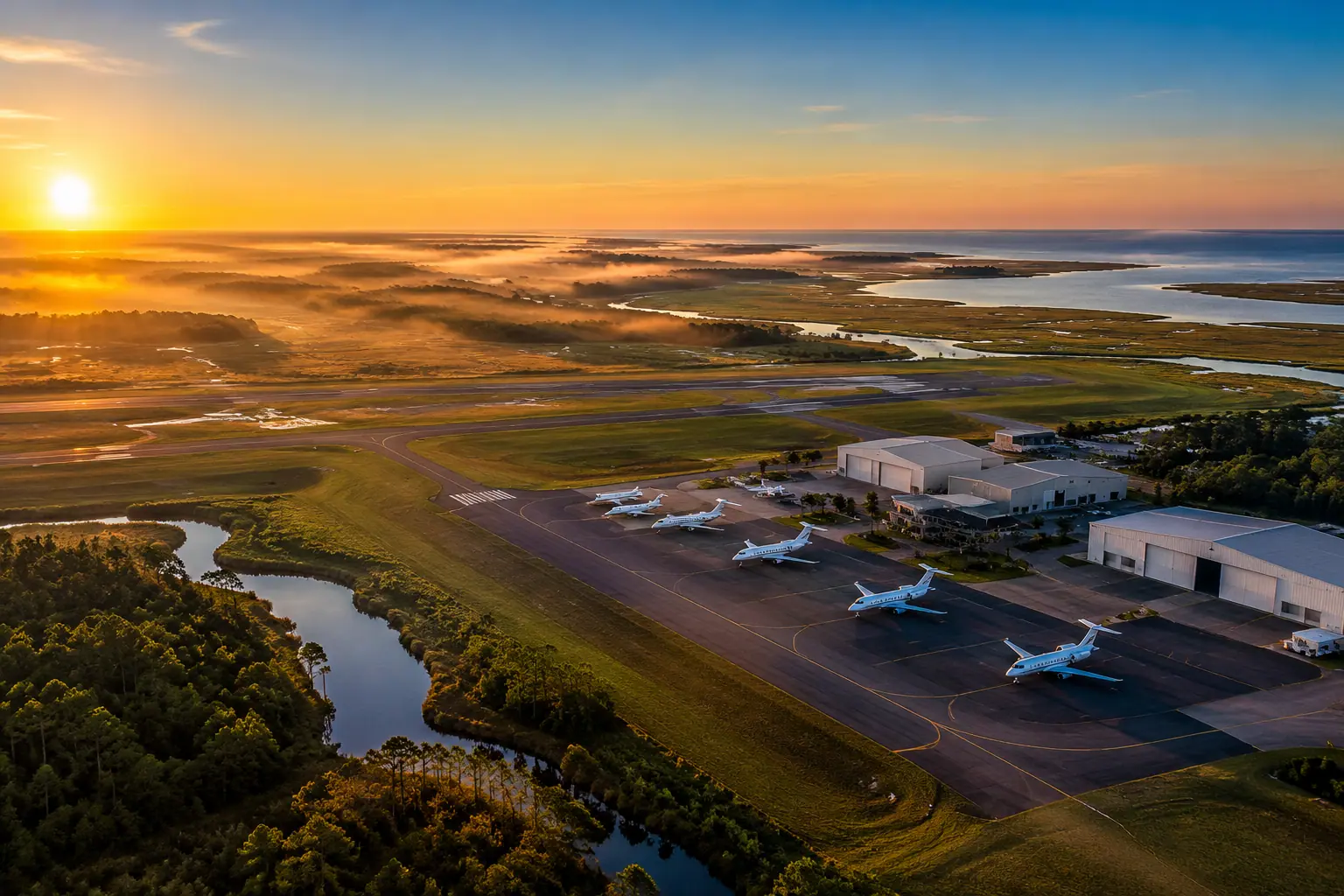
Pet friendly jet charter Nashville requests all route through one field: Nashville International Airport, KBNA, sitting at 599 ft with a longest runway of 11,030 ft. That runway length matters more than the elevation, because it gives midsize and super-midsize jets room to work even on a warm afternoon. We are a broker, not an operator: the flights themselves are flown by FAA Part 135 operators who hold operational control, and we act as your agent under DOT Part 295 rules for brokers.
Nashville departures favor the 11,030 ft runway at KBNA for heavier cabin classes. Short-field turboprops still work here, but the field rarely forces a payload trade the way mountain airports do. Where the math changes is temperature. July afternoons push density altitude to about 2,700 ft, and a 115F peak day reaches roughly 3,300 ft. That is a real but manageable penalty, and it mostly affects takeoff distance and climb rate rather than whether a given jet can serve the route.
For pet owners, the practical question is cabin policy, not airport infrastructure. Each operator sets its own rules on carriers, cabin size limits and paperwork, so a pet friendly private jet charter from Nashville depends on the aircraft and operator pairing. Some turboprops and light jets have tight cabin dimensions for a large crate; midsize cabins usually give you more floor space. Tell us the animal, the crate size and the route, and we match the request to operators who accept pets in cabin. Bring current vaccination records either way.
Runways and field performance at KBNA
Nashville International's longest runway measures 11,030 ft at a field elevation of 599 ft, a pairing that supports everything from turboprops to large-cabin jets. The 11,030 ft runway at Nashville International keeps summer takeoff numbers comfortable for most jets. On the hottest days, when density altitude climbs toward 3,300 ft, crews still run performance numbers for weight and temperature, but the field is not the constraint it would be at a high-elevation airport such as Centennial outside Denver, which sits at 5,885 ft.
| Runway | Length | Width | Surface |
|---|---|---|---|
| 13/31 | 11,030 ft | 150 ft | Asphalt |
| 02C/20C | 8,001 ft | 150 ft | Concrete |
| 02R/20L | 8,001 ft | 150 ft | Concrete |
| 02L/20R | 7,704 ft | 150 ft | Concrete |
FBOs serving Nashville charter flights
Four FBOs on the field handle general aviation traffic at KBNA: Atlantic Aviation, Azure Flight Support, Contour Flight Support and Signature Aviation. Nashville charter arrivals use Atlantic, Azure, Contour or Signature, so ground handling varies by operator. Which one your flight uses depends on the operator's contract, not your preference, though we can note a request when you book. For international returns, CBP clearance is arranged in advance through the operator and the FBO; do not assume it happens automatically on a Sunday evening.
What this airport suits best
- Music industry travel to and from downtown Nashville, with a short hop from KBNA to the hotels and venues
- Pet owners flying with a crate or a small dog, matched to operators who accept animals in cabin
- Business trips to New York, Los Angeles or Miami on midsize and super-midsize jets
- Group trips where the 11,030 ft runway allows a heavier aircraft without a fuel stop
| Cabin | Typical runway need | Here |
|---|---|---|
| Turboprop | 3,300 ft+ | Fits |
| Light jet | 4,000 ft+ | Fits |
| Midsize jet | 5,000 ft+ | Fits |
| Super-midsize jet | 5,200 ft+ | Fits |
| Heavy jet | 5,600 ft+ | Fits |
Heat and density altitude by season
Density altitude at KBNA runs from near field elevation in January to roughly 2,700 ft in July, a swing that changes takeoff and climb performance. July at Nashville brings about 2,700 ft density altitude and 17 wet days, the toughest month for performance planning. August holds close to that at 2,600 ft, and a 115F extreme pushes the figure near 3,300 ft. Spring and fall sit in the middle: April around 1,400 ft, October around 1,700 ft.
Wet days matter as much as heat. July averages 17 of them, June 14, and February and March 13 each. Thunderstorm activity in summer means departure slots can move, so build slack into tight connections. Winter is gentler on performance, with January density altitude at field elevation and highs near 48F, but deicing and morning fog can still delay a departure. If you are flying a light jet with a full cabin and bags on a July afternoon, then a slightly earlier departure often solves the performance question entirely.
| Month | Avg high | Wet days | Density elevation |
|---|---|---|---|
| Jan | 48°F | 11 | 0 ft |
| Feb | 53°F | 13 | 300 ft |
| Mar | 61°F | 13 | 900 ft |
| Apr | 69°F | 12 | 1,400 ft |
| May | 79°F | 13 | 2,100 ft |
| Jun | 86°F | 14 | 2,500 ft |
| Jul | 89°F | 17 | 2,700 ft |
| Aug | 87°F | 15 | 2,600 ft |
| Sep | 83°F | 9 | 2,300 ft |
| Oct | 73°F | 9 | 1,700 ft |
| Nov | 60°F | 9 | 800 ft |
| Dec | 53°F | 11 | 300 ft |
Getting to and from the field
Nashville International sits roughly 8 miles southeast of downtown, a drive of about 15 to 20 minutes outside rush hour. KBNA sits about 8 miles from downtown Nashville, close enough for a same-morning departure. Rideshare and hotel cars both work; the FBOs handle the curb side. If your itinerary includes an international leg, then CBP clearance needs to be built into the schedule rather than assumed, and TSA screening rules apply where the operator uses a screened terminal.
Trips through Nashville
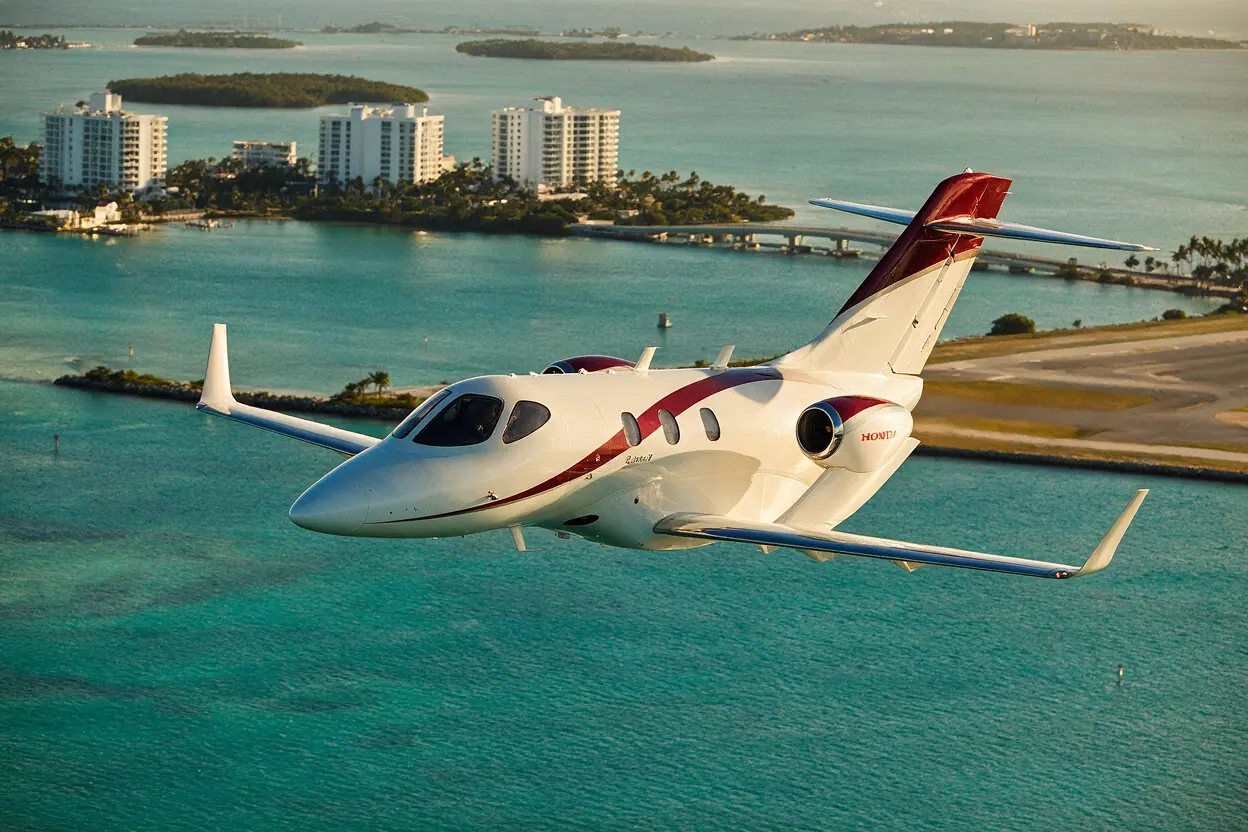
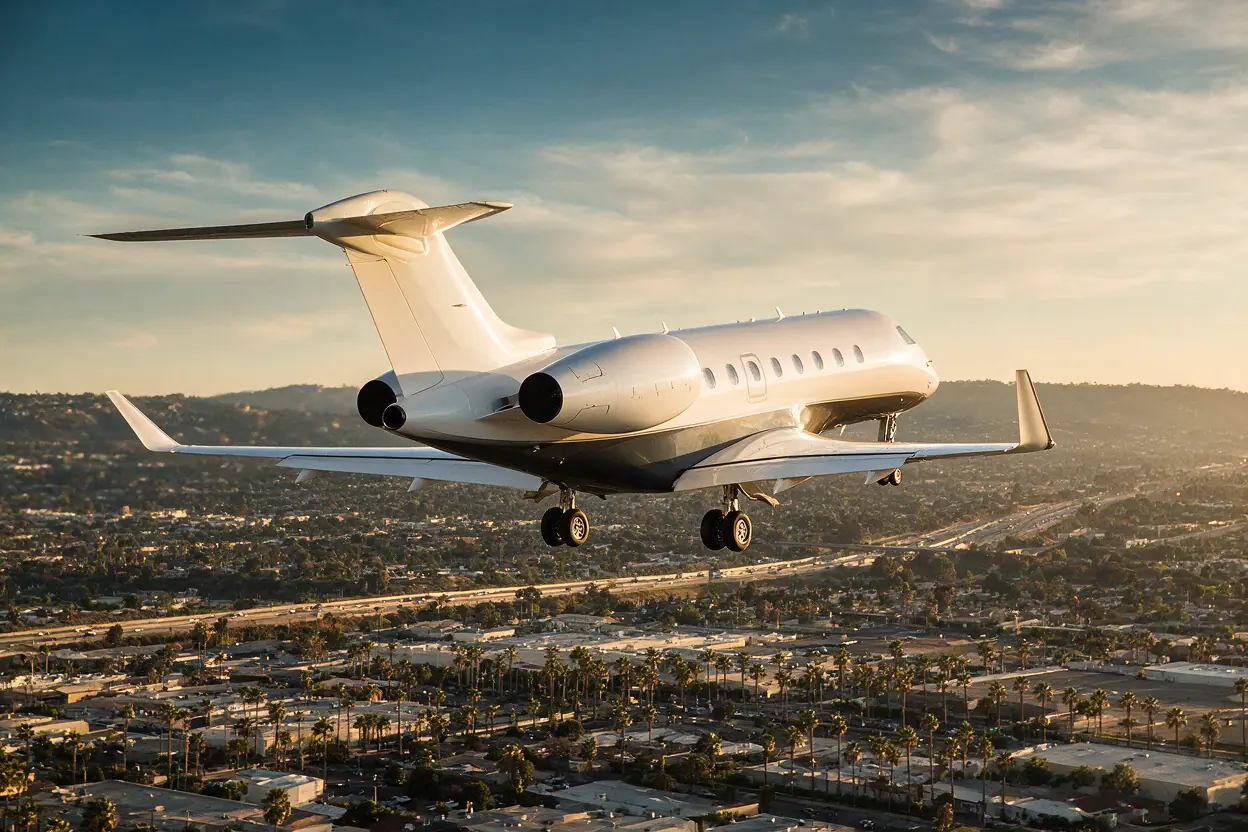
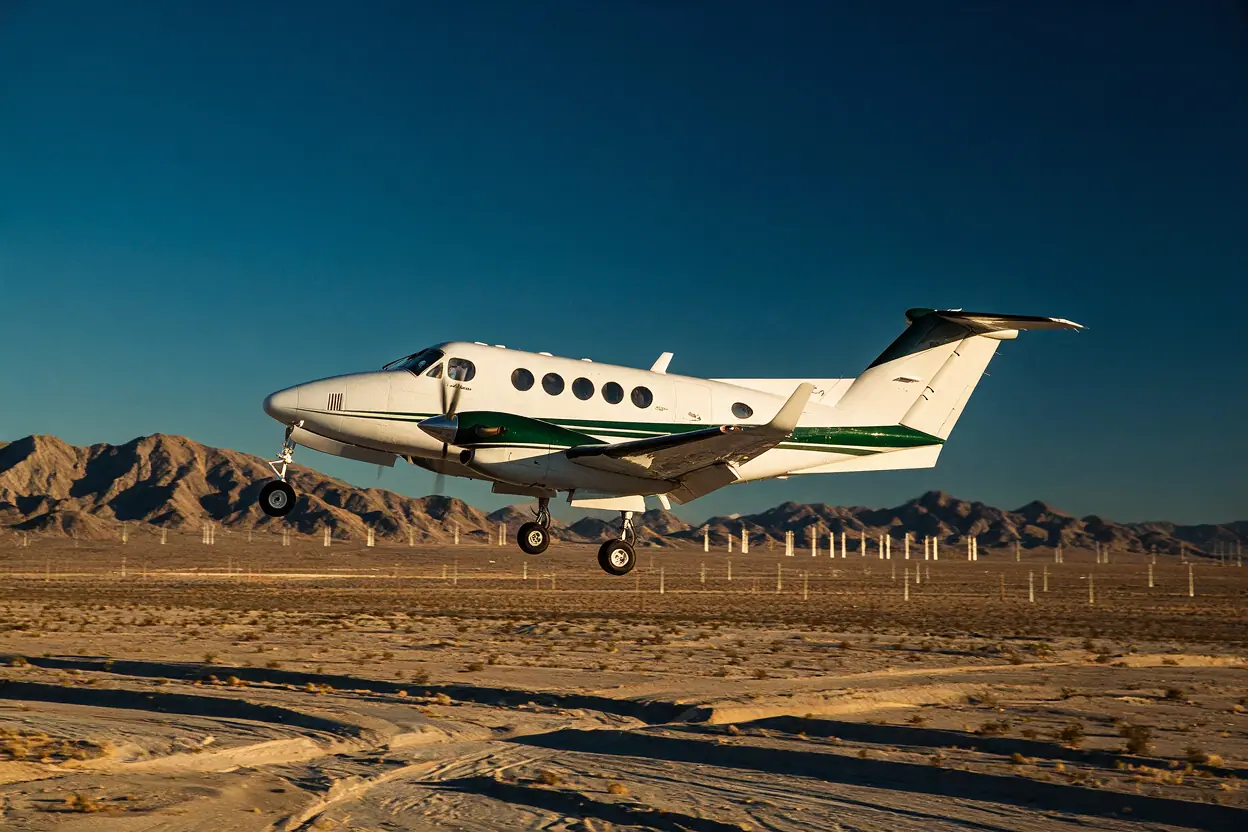
These 6 private jet routes span 199 to 2,129 nautical miles, with single-leg light jet quotes ranging from $4,000 to $36,000.
Questions about this airport
Does pet friendly jet charter Nashville allow dogs in the cabin?
Yes, when the operator permits it. Pet friendly jet charter Nashville requests are matched to aircraft whose operators accept animals in cabin, and the rules vary by company: carrier dimensions, weight limits and whether the pet stays in a crate for taxi. There is no single airport-wide policy at KBNA. Send the breed, weight and crate size with your request and we screen operators against those details before quoting.
How much does a private jet charter from Nashville cost?
Quotes are estimates and depend on aircraft category, distance and crew time. A light jet costs less per hour than a midsize or super-midsize, and the 11,030 ft runway at KBNA means you are not paying a payload penalty for field length. Expect the price to move with fuel, overnight fees and how close to departure you book. We itemize each quote so you can compare operators on the same route.
Which airports does a Nashville charter use for Los Angeles or New York?
Los Angeles trips often land at Van Nuys, 229 miles from the Las Vegas strip and about 8,001 ft of runway, while New York traffic typically uses Teterboro with its 6,997 ft runway. Both are dedicated general aviation fields, which keeps pet handling simpler than a big commercial terminal. Nashville International itself handles the departure side, and we confirm the arrival FBO before you book.
What is density altitude at KBNA in summer?
Roughly 2,700 ft in July and 2,600 ft in August, against a field elevation of 599 ft. An extreme 115F day pushes it to about 3,300 ft. That affects takeoff distance and climb rate, not legality, and crews run the numbers for weight and temperature. For a light jet at high summer temperatures, an earlier morning departure is often the simplest fix.
Are the flights operated by the broker?
No. Flights are flown by FAA Part 135 operators who hold operational control, including responsibility for crew, maintenance and dispatch. We arrange the trip as your agent, which is the broker role recognized under DOT Part 295. That distinction matters if anything changes on the day: the operator makes the operational call, and you have a named counterparty for the flight itself.
How many wet days should I plan around in Nashville?
July averages 17 wet days, the highest of the year, and June 14. February and March each see 13. Thunderstorms in summer can shift departure slots, so allow buffer before a tight connection. Winter is drier on paper at 11 wet days in January, but deicing and fog can still cost you time on an early departure.